Who will inherit Patagonia? Generational turnover and the future of agriculture
Production is undergoing a severe economic crisis and a decline in livestock inventories; simultaneously, young people are losing interest in rural work, while farming families seek an intergenerational balance.
Argentine Patagonia, renowned for its sheep farming, faces a vital challenge. Compounding the current problem of extreme drought is a shortage of young individuals willing to continue their families’ arduous rural labor. For many producers, the question that increasingly weighs upon them is a different one: who will carry on the agricultural operations.
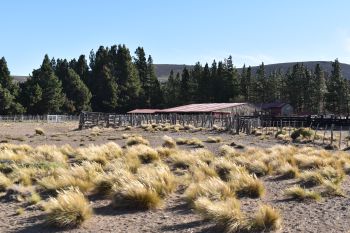
The exodus to major cities and significant ideological clashes among grandparents, parents, and children are straining the continuity of historic agricultural enterprises. The future of sheep production remains uncertain. Octavio Saint Antonin is a young producer and fourth-generation member of the Rayhuao ranch in the province of Río Negro. His family commenced sheep production in 1936. At that time, his great-grandfather started with a mere six hundred head of sheep. Today, the young man observes that it is exceedingly difficult to find peers willing to live and work in isolated rural areas. “I believe there are not many young people willing to commit to the agricultural sector or return to Patagonia,” he stated with concern.

For those youths who do choose to stay, daily operations are not straightforward. The new generations attend university and seek to implement modern technologies in production. However, older generations place full confidence in their extensive practical experience. Octavio currently works alongside his father and grandfather. He explained that the greatest challenge is finding a healthy balance between the different generations. “One cannot arrive as a young person and say, ‘we are going to change everything entirely,'” he recounted. He also pointed out the necessity of acknowledging that their ancestors were successful, meaning they implemented sound agricultural practices that should not be altered.
Furthermore, he noted that family debates on the farm are constant. “Sometimes they are arguments, but other times it is a matter of tastes or preferences,” added Saint Antonin. This rural family dynamic yields varied outcomes in southern Argentina. In the province of Chubut, the Gonzalo family represents a highly successful case of generational integration. Julián Gonzalo Jr., a fifth-generation member at the Río Pico ranch, acknowledged the reality of working alongside his father and brother. He recounted that in a family enterprise, there are “always” disagreements, but quickly clarified that these are strictly professional debates aimed at collective advancement and the improvement of production.

His father, 76-year-old Julián Gonzalo, feels profound joy seeing his professional children in charge of the business. His own history is one of significant sacrifice, as his father immigrated to Argentina from Spain in 1905 and began working from the very bottom. Therefore, he particularly values the family’s present circumstances. “Looking back and seeing generations of children and grandchildren pushing forward right alongside you is something I cannot express in words,” he related with emotion and pride. In stark contrast, other producers face a very different reality. Héctor Zamborain is 70 years old and works tirelessly in the Maquinchao area of Río Negro. He is the third generation of a family of Basque origin dedicated to sheep farming.
Today, his daughters pursue their professional lives far removed from Patagonian livestock farming. However, he highlighted that he still has his grandchildren, although it is not an immediate concern for him. Despite this, he chooses not to distress himself over the future of his land once he can no longer work it. “It is something that, unbelievable as it may seem, does not worry me. I am someone who leaves the past behind, I live in the present, and the future is for whoever inherits it,” Zamborain confessed with complete tranquility. This scenario unfolds amidst a profound production crisis that has been relegated to the background, yet remains decisive. Leandro Ballerini, president of the Bariloche Rural Society, explained that the economic situation does not entice the youth.
Producers are suffering from low profitability, exceedingly high costs, and a historic drought that has affected 70 percent of pastures. “We are witnessing the twilight of the sheep industry in large parts of Patagonia,” Ballerini warned. In 2011, Río Negro had 1.4 million head of sheep, whereas today it has fewer than 900,000. Veteran and young producers must integrate accumulated experience with the tools of the future. Without this family consensus, and without improvements in profitability, the historic sheep ranches of Argentina run the grave risk of being left abandoned in the coming years.