In the tiny West African nation of The Gambia, thousands of smallholder farmers work every day to feed their families, supply local markets and contribute to the national economy. Yet many of the people who produce the country’s food remain among the least heard voices in national conversations about agriculture.
Their challenges are real: limited access to timely information, markets, extension services, inputs, finance, appropriate technologies and climate information. Their successes are often equally invisible.
This is where the Network of Agricultural Communicators – The Gambia (NAC-Gambia) sees its purpose.
NAC-Gambia is driven by a simple but powerful conviction: farmers should not only be the subjects of agricultural stories, but they should be the voices shaping the conversation about agriculture.
Established in 2009, NAC ‘s members include agricultural journalists, media practitioners and communicators who are passionate about reaching farming communities, listening to their concerns and creating platforms through which those concerns can be heard. Their audience is made up of policymakers, development partners, researchers, extension workers, businesses and the wider public.
From women working in vegetable gardens to young people entering agribusiness, NAC-Gambia believes their experiences, challenges, innovations and aspirations should form an important part of the country’s agricultural development story.
“Agricultural journalism is not just about reporting on farming; it is about giving farmers a voice in national development and connecting them to the people, policies, markets, and resources that can help them succeed,” said Dawda Bayo, president, NAC-Gambia.
NAC-Gambia has already demonstrated what is possible when agricultural communication receives strategic support. Between 2016 and 2018, the Network collaborated with Danish Food and Agricultural Journalists on an 18-month agricultural communication project. The project strengthened the professional capacity of agricultural journalists, increased attention to agricultural issues and, importantly, encouraged journalists to put farmers at the center of agricultural reporting.
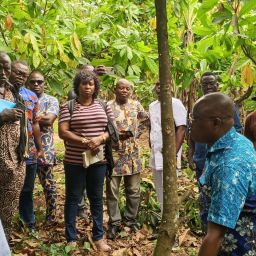
Journalists were encouraged to go beyond reporting institutional activities and policies. They were trained to listen to farmers, document their experiences, understand their challenges and tell stories about their innovations and successes.
The project also strengthened connections between agricultural communicators and community radio stations while helping agricultural information reach rural audiences in accessible formats and languages.
“Community radio is our bridge to farmers because it is affordable, accessible and reaches communities where newspapers, the internet and smartphones may not,” Bayo said.
NAC-Gambia believes that the potential of agricultural journalism in The Gambia is much greater than what its current resources allow. With strategic investment, partnerships and technical support, NAC-Gambia could develop into a stronger platform capable of reaching more farmers and producing more high-quality agricultural content.
Among its aspirations are a dedicated agricultural newsroom, regional correspondents, stronger community-radio programming, improved production equipment, agricultural data and information services, digital content production and specialised training for journalists.
The network also sees opportunities to strengthen reporting on women and young people in agriculture, climate-smart agriculture, agricultural innovation, food and nutrition security, markets and rural entrepreneurship.
Such investment could help move NAC-Gambia from a largely volunteer-driven structure toward a more professional and sustainable agricultural communication institution.
“Despite limited mobility and equipment, our journalists continue to travel the extra mile, work longer days, and use every available platform to give voice to the voiceless,” said Modou Touray, NAC-Gambia.
The passion already exists. The commitment already exists. What is needed now are the resources, opportunities, partnerships and technical support to take the network to the next level.
Every farmer deserves a journalist willing to listen.
Support the ones who do.