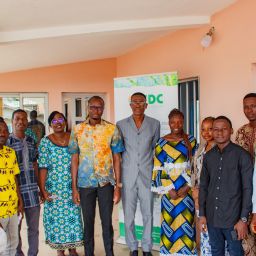
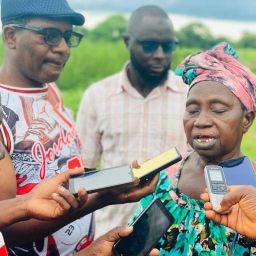
“Agricultural journalism in Togo was once a dream people thought impossible,” said Gilles Essonana Podjoley, president of JTAD. “But we convinced our colleagues to specialise — and today, many journalists have done exactly that.”
Founded in 2006 and based in Lomé, JTAD is Togo’s national network of agricultural journalists. The association supports 45 active members who work in television, radio, print and digital media, covering one of the most important and least reported areas in West Africa: farming.
Agriculture accounts for roughly 22.8% of Togo’s GDP and employs the majority of its active population. When the sector goes unreported, the challenges farmers face become invisible to policymakers and the public. The consequences are felt by the country’s entire population.
JTAD members cover smallholder livelihoods, cooperative farming, livestock, fisheries, and the value chains that connect rural producers to urban markets. They also support one another’s professional development while maintaining active ties with regional networks across West Africa and the Sahel.
None of this has been easy. Like many professional associations in the region, JTAD has struggled with member engagement, inconsistent dues, and a persistent shortage of funds. Activities have been planned and shelved. Members have drifted. And yet the association has somehow kept its regional relationships intact and its commitment to journalism undiminished.
It’s that persistence that will carry JTAD forward. Make no mistake, its members have ambition. The invitation to participate in the JumpStart programme provides, in the association’s own words, a second chance. It’s an opportunity not just to maintain its relationship with IFAJ, but to meet its true potential.
“Here in Togo, agricultural journalism is gaining momentum and remains a driver of development,” said David Soklou, communications officer, JTAD. “We work to promote this form of journalism for greater impact in the agricultural sector — a source of wealth.”
Where will JTAD be by the end of the two-year programme? More credible in its governance, more consistent in its programming, and financially independent enough to organise its own activities without waiting for outside support. A guild that is growing its membership, deepening its field presence, and contributing meaningfully to Togo’s agricultural development.
Nearly two decades of persistence deserves a stronger foundation. Help Togo build it.