The Government of Liberia is stepping up efforts to transform its agriculture sector by placing women and young people at the heart of its national development strategy—marking a significant shift toward inclusive growth, job creation, and long-term food security.
Agriculture continues to be the backbone of Liberia’s economy, employing a significant portion of the population, especially in rural areas. However, for many years, women and youth, who constitute the majority of smallholder farmers, have faced ongoing obstacles, including limited access to financing, land, modern technology, and dependable markets.
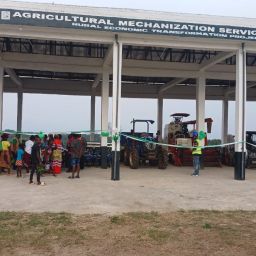
To address these challenges, Liberia is implementing large-scale reforms and investments designed to unlock the potential of these groups. One of the flagship initiatives is the Rural Economic Transformation Project (RETRAP), funded primarily by the Government and the World Bank and implemented by the Ministry of Agriculture. Running through 2029, the project aims to reach at least 96,000 smallholder farmers, with at least 50 percent of them women.
The project focuses on increasing agricultural productivity, strengthening resilience, and improving market access across key value chains, including rubber, cassava, rice, vegetables, and livestock. By encouraging private sector investment and building stronger links between farmers and agribusinesses, the project is helping create more efficient and climate-resilient agricultural systems.
Strengthening Youth Empowerment and Skill Development
As part of its broader strategy to engage young people, the Ministry of Agriculture recently signed a nearly US$1 million partnership agreement with eight higher education institutions. The initiative is designed to equip students with practical farming skills, modern equipment, and hands-on experience in commercial agriculture.
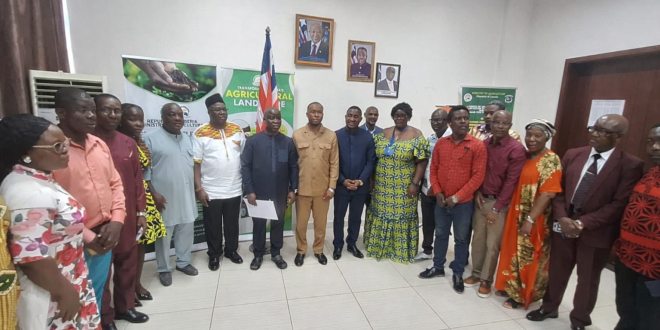
Liberia Agriculture Minister Dr. J. Alexander Nuetah and Eight Higher Institutions of Learning at the MOU Signing Ceremony in Monrovia.
Beyond skills development, the program aims to tackle youth unemployment by preparing graduates for careers and entrepreneurship opportunities across the agricultural value chain—from production and processing to storage and marketing. It also supports increased domestic food production, helping reduce reliance on imports while strengthening national food security.
This approach builds on a policy direction outlined by Liberia’s Agriculture Minister, Dr. J. Alexander Nuetah, at the 2025 Africa Food Systems Forum in Dakar, Senegal. He emphasized the importance of investing in young people, who will be the future drivers of agricultural transformation.
“The future of agriculture lies in the hands of our young people,” he said. “If we cultivate in them a passion for agriculture through practical exposure, innovation, and mechanization, then we secure the future of the sector.”
Women-led agribusinesses are also receiving targeted support through a combination of financing, technical training, and infrastructure development. These interventions are helping women entrepreneurs expand operations, improve product quality, and access new markets. Investments in storage facilities, processing centers, and rural roads are further reducing post-harvest losses and strengthening supply chains.
The impact of these efforts is already visible.
Falama Incorporated, a women-led cassava processing enterprise, once struggled with manual production methods, high energy costs, and limited capacity. Today, with support from RETRAP, the company has transitioned into a more modern and efficient operation, improving both output and product quality.
“Everything was manual—production, sieving, and packaging,”recalled CEO Angie M. Howard. “We were working hard, but our capacity was very limited.”
With new equipment and the construction of a training and resource center, Falama now serves as both a production hub and a knowledge center for farmers, offering training in processing techniques, quality control, and good agricultural practices.
A similar transformation has taken place at Nimba Pastry, a women-owned cassava-based enterprise. Previously reliant on firewood and labor-intensive methods, the business has evolved into a modern operation following support from the Ministry of Agriculture.
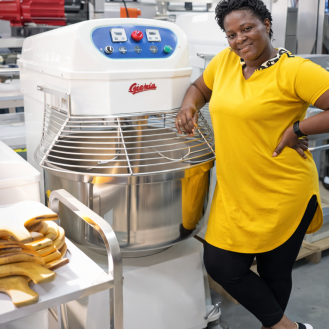
Through a US$250,000 matching grant, the company acquired modern baking equipment, a delivery vehicle, and training in business management and food safety. Production capacity has increased significantly, and operations have shifted to gas-powered and automated systems—improving efficiency while reducing physical strain.
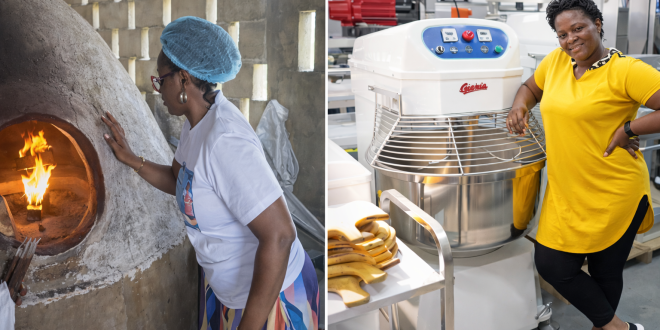
Clay Oven used for baking before RETRAP Support. Modern Bakery after RETRAP Support.
“I was working with local ovens, bending my back over firewood,” said owner Dwedor Freeman. “Everything was manual, and it affected my health.”
Today, Nimba Pastry produces up to 150 bread pans every 20 minutes and has expanded its workforce from seven to 27 employees—most of them women—while also providing skills training to members of the local community.
These success stories are not isolated gains; they are part of a deliberate and coordinated national effort to reposition agriculture as a viable, modern, and attractive sector for both women and young people. For many years, agriculture in Liberia has been perceived largely as subsistence-based and labor-intensive, offering limited economic returns. However, ongoing reforms are steadily changing that narrative—reframing agriculture as a dynamic sector with real opportunities for innovation, entrepreneurship, and wealth creation.
At the policy level, the government is prioritizing inclusivity by designing programs that intentionally lower the barriers faced by women and youth. This includes improving access to land and finance, integrating gender-responsive approaches into agricultural planning, and promoting youth-focused initiatives that link education to employment. By aligning national strategies with global development priorities such as food security, climate resilience, and sustainable livelihoods, Liberia is positioning its agriculture sector within a broader international development framework.
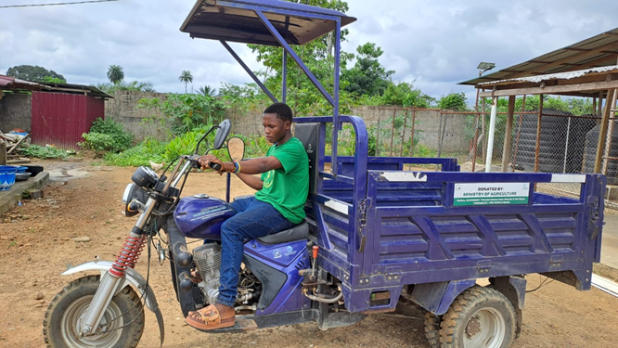
An Intern Agriculture Student Supporting Transport Service at Falama Farm through RETRAP Supplied Tri-Cycle.
Investment is another key pillar driving this transformation. Through partnerships with international institutions, particularly the World Bank, Liberia is channeling resources into critical areas such as rural infrastructure, mechanization, irrigation, and agro-processing. These investments are not only increasing productivity but also strengthening entire value chains—ensuring that farmers, processors, and distributors are better connected to markets both domestically and regionally.
Equally important is the emphasis on capacity building. Training programs, extension services, and institutional partnerships are equipping farmers and agripreneurs with the technical skills and business knowledge needed to compete in a modern agricultural economy. Young people, in particular, are being introduced to agriculture not just as farming, but as a diverse ecosystem of opportunities crossing technology, logistics, processing, marketing, and agribusiness management.